What Is Horizontal Directional Drilling and How Does It Work?
Underground construction plays an essential role in connecting homes, businesses, and communities to vital utilities. However, installing pipelines, electrical conduits, and communication cables beneath roads, sidewalks, and developed properties can present significant challenges.
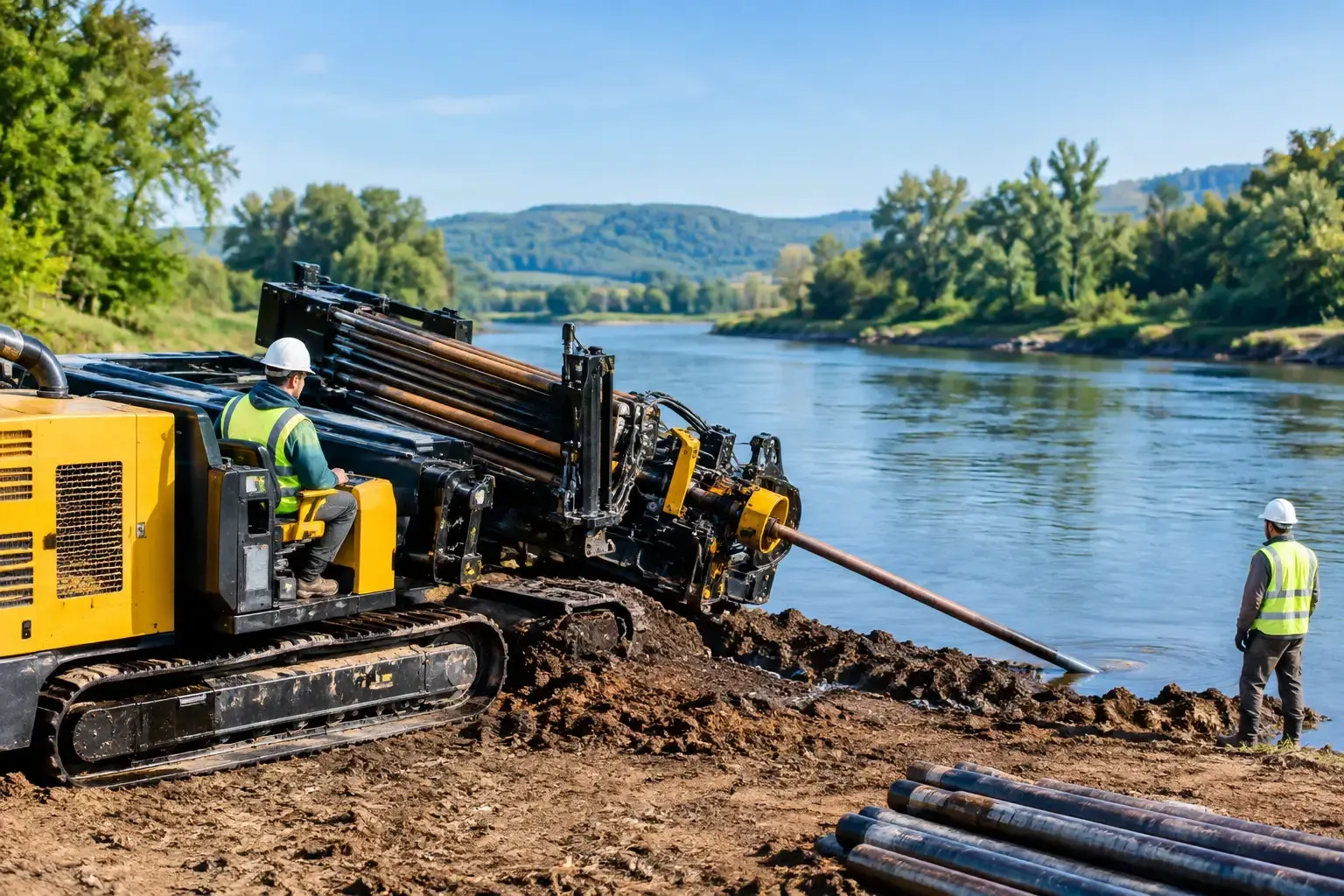
Horizontal directional drilling (HDD) provides an effective alternative to traditional excavation. This trenchless construction method allows contractors to install underground utilities along a planned route while minimizing disruption to the surface.
From gas pipelines to fiber optic networks, horizontal directional drilling has become an important technique in modern underground infrastructure development.
Understanding how horizontal directional drilling works, the equipment involved, and its benefits can help property owners, developers, and utility companies determine whether it is suitable for their projects.
What Is Horizontal Directional Drilling?
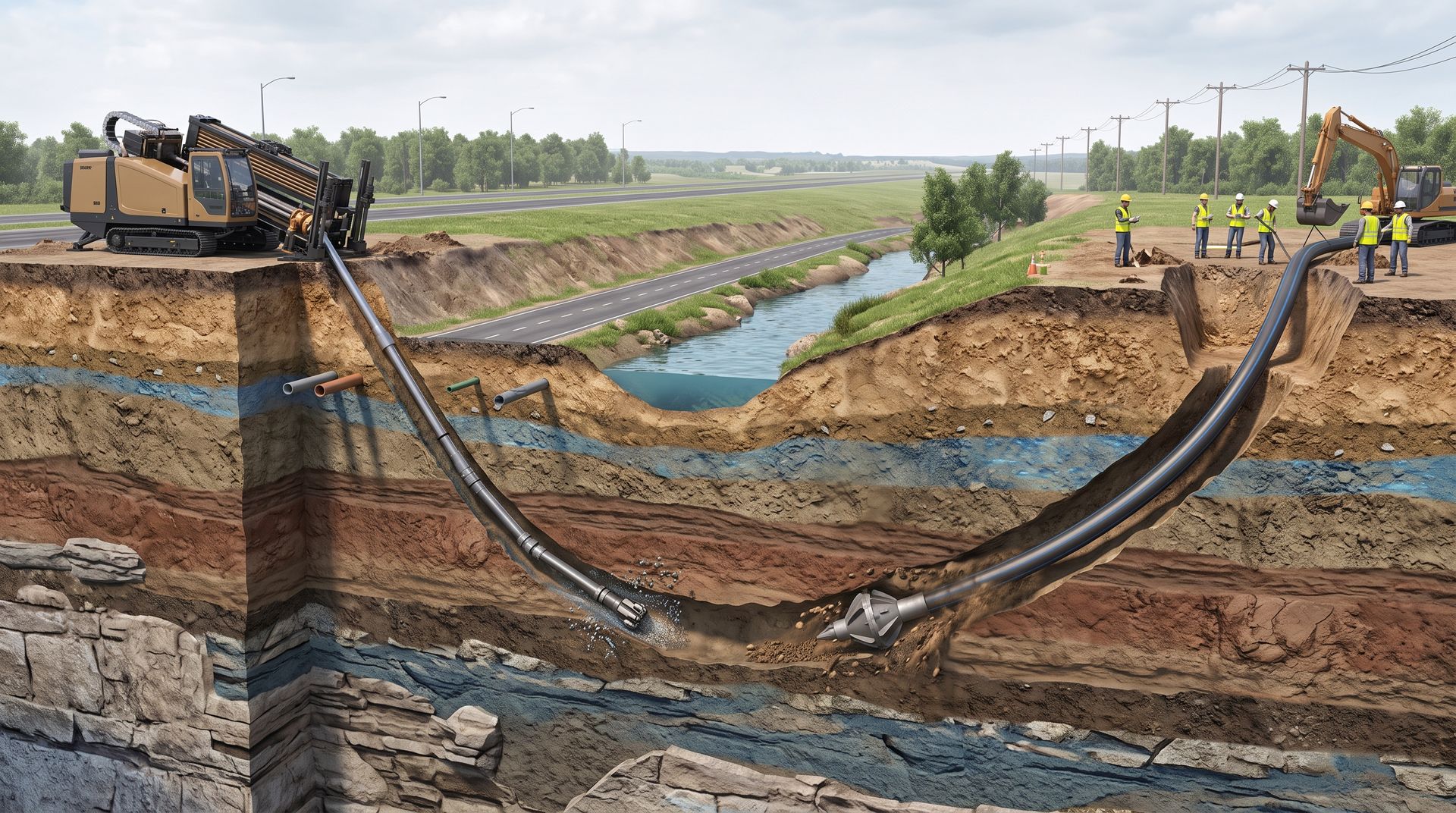
Horizontal directional drilling is a trenchless construction technique used to install underground pipes, conduits, and utility lines without digging a continuous trench along the entire installation route.
Instead of excavating large sections of ground, contractors use specialized drilling equipment to create a guided underground pathway.
The process generally involves drilling a pilot hole, enlarging the borehole when necessary, and pulling the required pipe or conduit into position.
Horizontal directional drilling is commonly used for:
- Underground water and gas pipeline installations.
- Electrical conduit installation.
- Telecommunications and fiber optic infrastructure.
- Utility crossings beneath roads and highways.
- Underground infrastructure improvements.
- Commercial and industrial utility projects.
Because HDD can follow a planned underground path, it is particularly useful in locations where extensive excavation would disrupt existing structures, traffic, landscaping, or other surface features.
How Does Horizontal Directional Drilling Work?
The horizontal directional drilling process involves several carefully planned stages. Each step helps establish a reliable underground pathway while maintaining control over the drilling direction and installation requirements.
Step 1: Site Assessment and Project Planning
Before drilling begins, contractors evaluate the project location, soil conditions, existing underground utilities, and installation requirements.
During this stage, crews may:
- Identify the proposed underground utility route.
- Locate existing pipes, cables, and other buried infrastructure.
- Evaluate soil and geological conditions.
- Determine appropriate drilling depths.
- Establish entry and exit locations.
- Select drilling equipment and installation materials.
Proper planning helps minimize utility conflicts and identify potential construction challenges before drilling starts.
Step 2: Drilling the Pilot Hole
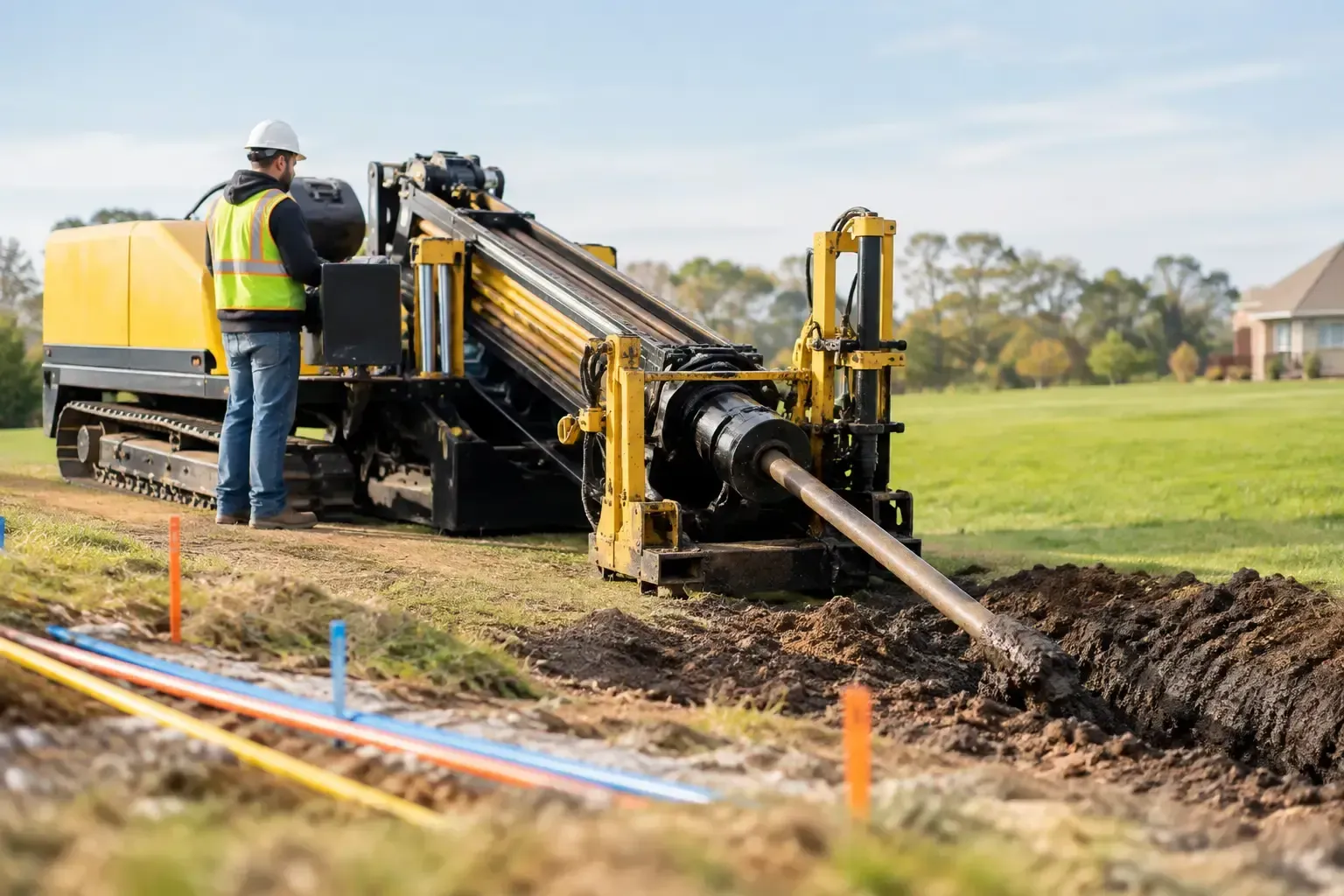
The first major stage of horizontal directional drilling involves creating a small pilot hole along the planned underground route.
A specialized drilling rig pushes a drill string equipped with a drilling head into the ground.
Guidance and tracking equipment helps operators monitor the drill head's position and adjust its direction as needed.
This controlled drilling approach allows contractors to navigate a designed underground alignment and avoid certain obstacles.
Step 3: Enlarging the Borehole
Once the pilot hole reaches its designated exit point, the contractor may enlarge the opening through a process called reaming.
A reamer increases the borehole diameter to accommodate the pipe or conduit being installed.
Depending on the pipe size and ground conditions, the crew may complete multiple reaming passes.
The goal is to create sufficient space for the underground utility while maintaining suitable installation conditions.
Step 4: Installing the Underground Pipe or Conduit
After the borehole has been prepared, the pipe or conduit is connected to the drilling assembly and pulled through the underground pathway.
The installation crew monitors pulling forces and other project conditions to help protect the materials.
This process allows underground utilities to be installed without excavating the entire route from beginning to end.
Step 5: Inspection and Site Restoration
After installation, contractors perform applicable inspections, testing, and finishing work based on the project requirements.
Any disturbed entry and exit areas are restored as needed.
Because horizontal directional drilling reduces the need for continuous trench excavation, surface restoration may be less extensive than with traditional excavation methods.
What Equipment Is Used in Horizontal Directional Drilling?
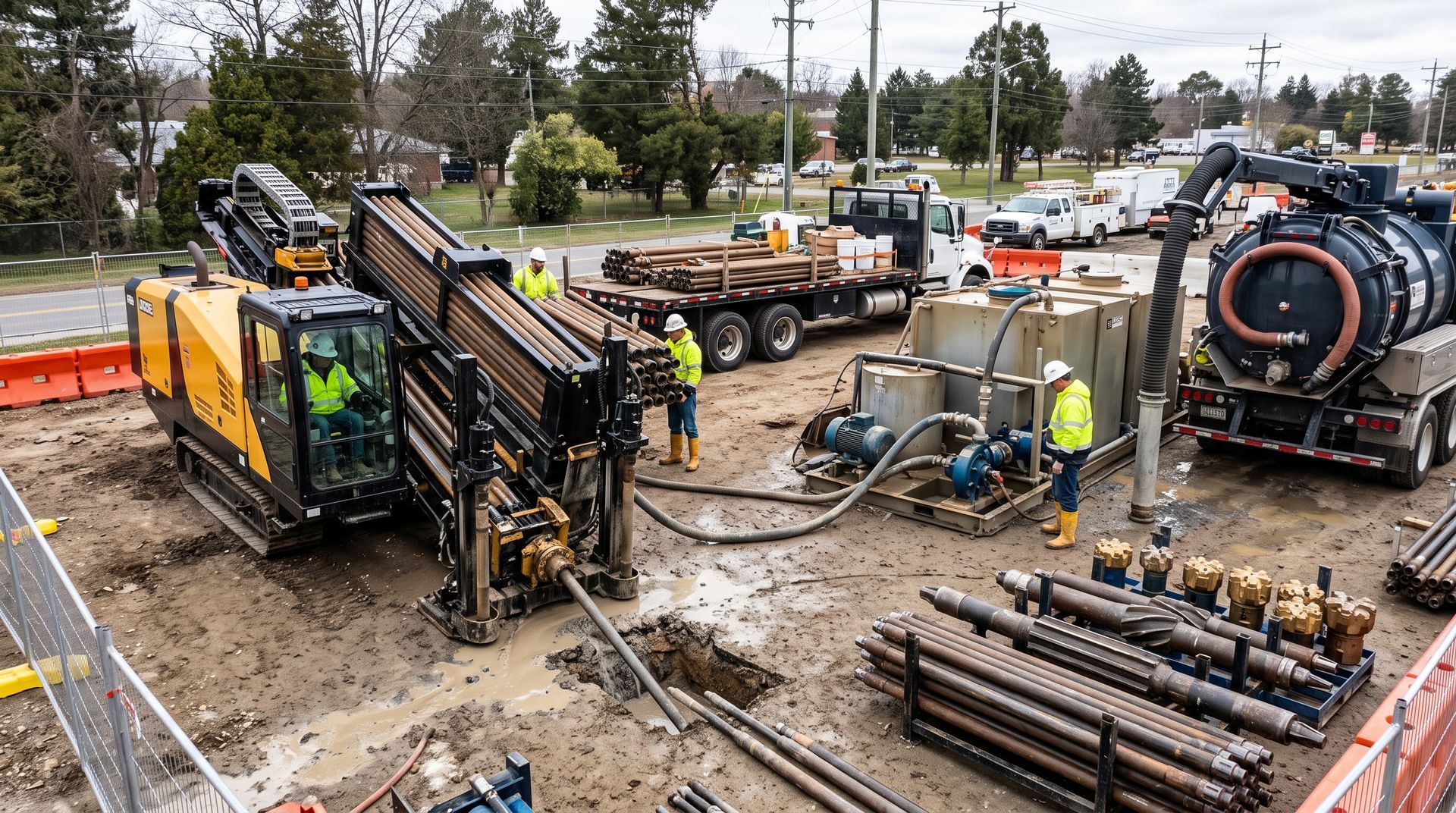
Successful horizontal directional drilling requires specialized machinery and tools designed for underground construction.
The equipment selected depends on the installation distance, ground conditions, utility materials, and project complexity.
Horizontal Directional Drilling Rig
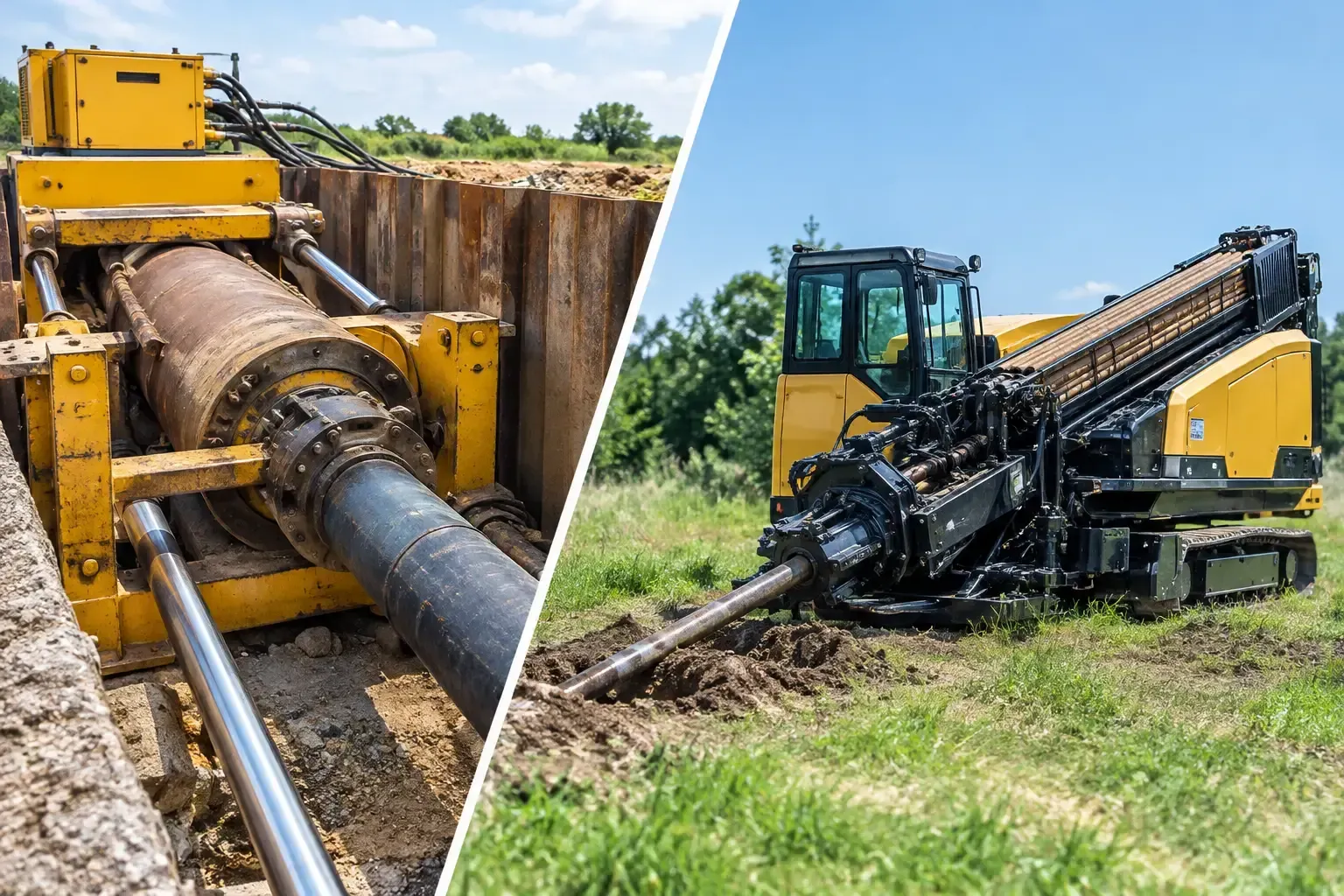
The drilling rig is the primary machine responsible for advancing and pulling the drill string through the ground.
It provides the thrust, rotation, and pulling force required during drilling and installation.
Drill Bits and Drill Heads
Drill bits and specialized drill heads are used to create the initial pilot hole.
Different cutting tools may be selected depending on whether the ground contains soil, clay, sand, gravel, or rock.
Drill Rods
Drill rods connect the rig to the drilling head, transmitting force and rotation through the underground bore.
Additional rods are connected as the drill advances.
Guidance and Tracking Systems
Guidance systems help drilling operators determine the drill head's position, depth, and orientation.
Accurate tracking is essential for following the planned drilling path and maintaining appropriate clearances from existing underground infrastructure.
Reamers and Pullback Equipment
Reamers enlarge the pilot hole so that pipes or conduits can be installed.
Pullback equipment is then used to draw the utility materials through the prepared borehole.
Drilling Fluid Systems
Many horizontal directional drilling projects use drilling fluids to support the installation process.
Depending on the conditions, drilling fluids can help:
- Transport drilled material out of the borehole.
- Cool and lubricate drilling equipment.
- Support borehole stability.
- Reduce friction during drilling and pipe installation.
Drilling fluids must be managed appropriately to reduce the risk of environmental impacts and unintended releases.
What Are the Main Applications of Horizontal Directional Drilling?
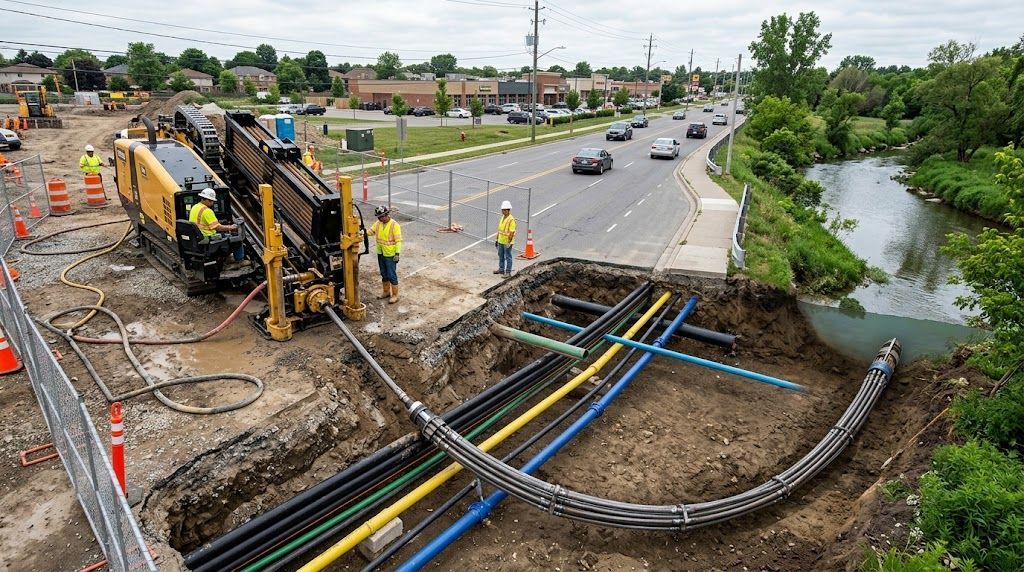
Horizontal directional drilling is widely used across underground construction projects because it can accommodate different utility types and installation environments.
Underground Pipeline Installation
Horizontal directional drilling can be used to install water lines, gas pipelines, and other suitable underground piping systems.
It is particularly valuable when pipelines must cross beneath roads, developed properties, or other obstacles.
Fiber Optic Installation
As demand for reliable communication infrastructure continues to grow, Fiber Optic Installation has become an important application of horizontal directional drilling.
HDD allows contractors to create underground pathways for protective conduits that carry fiber optic cables.
This approach can be useful for telecommunications projects in residential neighborhoods, commercial developments, and areas where extensive surface excavation would be disruptive.
Electrical and Telecommunications Infrastructure
Horizontal directional drilling also supports underground conduit installation for electrical distribution and communications infrastructure.
By placing suitable conduits below the surface, contractors can help reduce the need for extensive trench excavation during utility construction.
Roadway and Highway Crossings
Installing utilities beneath busy roads can create logistical challenges for construction crews.
Horizontal directional drilling provides a trenchless option for suitable roadway crossings, potentially reducing pavement removal and traffic disruption.
Commercial and Industrial Underground Construction
Commercial properties, industrial facilities, and infrastructure developments often require underground utility connections.
Horizontal directional drilling can provide a practical solution when installation routes must pass beneath existing pavement, parking areas, or developed spaces.
What Are the Benefits of Horizontal Directional Drilling?
Horizontal directional drilling offers several advantages for suitable underground utility projects.
1. Minimal Surface Disruption
One of the primary benefits of horizontal directional drilling is its ability to install utilities without excavating a continuous trench.
This helps reduce disturbance to roads, sidewalks, landscaping, and developed areas.
2. Reduced Restoration Work
Traditional excavation often requires significant surface restoration after underground utilities have been installed.
By limiting excavation primarily to entry and exit areas, HDD can reduce the amount of pavement repair, landscaping restoration, and backfilling required.
3. Efficient Utility Crossings
Horizontal directional drilling makes it possible to install utilities beneath certain surface obstacles without removing the infrastructure above them.
This can be especially beneficial for crossings involving roads, waterways, and developed properties.
4. Versatility Across Underground Construction Projects
Horizontal directional drilling supports multiple types of utility installations, including pipelines, electrical conduits, and communication infrastructure.
The method can accommodate a variety of project requirements when equipment capabilities and ground conditions are suitable.
5. Potential Time and Cost Savings
For appropriate projects, horizontal directional drilling may reduce excavation, surface restoration, and associated construction disruptions.
Actual savings depend on factors such as drilling distance, soil conditions, equipment needs, and installation complexity.
6. Reduced Impact on Existing Landscapes
Because extensive surface excavation is often unnecessary, HDD can help preserve landscaping and other surface features.
However, contractors must still evaluate drilling-fluid management, subsurface risks, and environmental requirements.
Horizontal Directional Drilling vs. Directional Boring
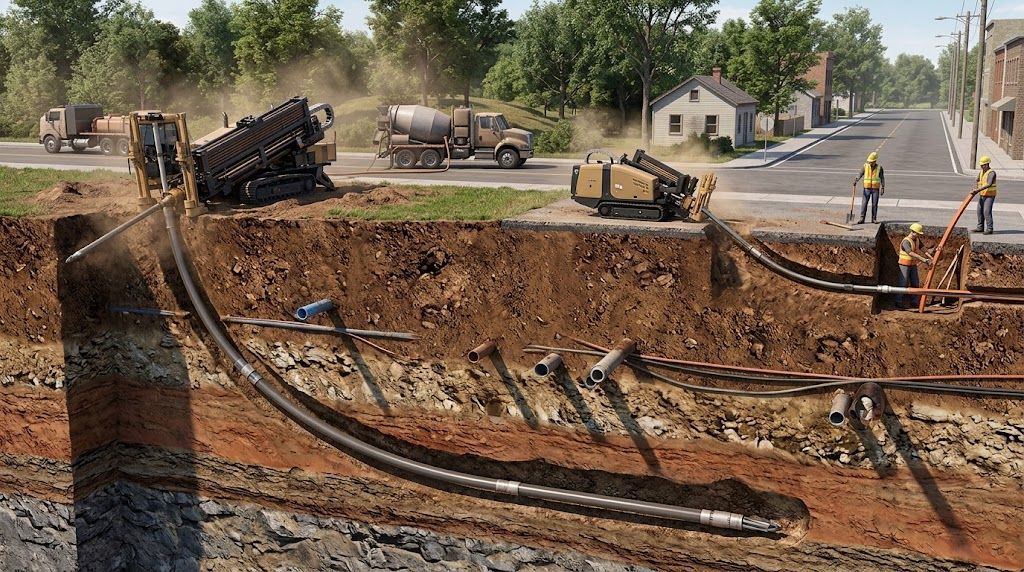
Horizontal directional drilling and Directional Boring are closely related terms in underground construction.
Both are commonly associated with installing underground utilities while reducing the need for continuous trench excavation.
In many construction discussions, directional boring is used as another name for horizontal directional drilling.
However, the terminology can vary depending on the equipment, installation technique, and scope of work.
For utility installations, choosing the appropriate method depends on factors such as:
- Required installation depth.
- Bore length and diameter.
- Underground obstacles.
- Soil and geological conditions.
- Type of utility being installed.
- Available equipment and access.
A qualified underground construction contractor can evaluate the site and recommend an appropriate installation approach.
Horizontal Directional Drilling vs. Cable Plowing
Although horizontal directional drilling is a useful trenchless installation method, it is not the only option available for underground utility construction.
Cable Plowing is another method used for installing certain underground cables and conduits.
Cable plowing typically uses specialized equipment that cuts a narrow path through suitable soil while placing cable or conduit below the surface.
The two methods serve different installation needs.
Horizontal directional drilling is often suitable when utilities must pass beneath roads, driveways, or other obstacles without continuous excavation.
Cable plowing may be more practical for certain long, relatively unobstructed routes with suitable ground conditions.
The best method depends on the project location, installation depth, utility type, and surrounding infrastructure.
What Factors Affect Horizontal Directional Drilling Costs?
The cost of horizontal directional drilling varies depending on the size and complexity of the underground construction project.
Several factors can affect the final estimate.
Drilling Distance
Longer drilling routes may require additional equipment time, drilling materials, and project planning.
Ground Conditions
Soil composition plays an important role in drilling performance.
Projects involving hard rock, unstable soil, or challenging geological formations may require specialized tools and drilling techniques.
Pipe or Conduit Diameter
Larger pipes and conduits generally require larger boreholes and may involve additional reaming work.
Existing Underground Utilities
Congested underground environments may require more detailed utility locating, planning, and safety precautions.
Site Accessibility
The amount of available space for drilling equipment, materials, and crew operations can affect installation logistics.
Project Requirements
Permits, environmental considerations, utility specifications, testing, and site restoration can also influence the overall project cost.
For these reasons, requesting a project-specific estimate is the most reliable way to understand the expected cost of horizontal directional drilling.
When Should You Choose Horizontal Directional Drilling?
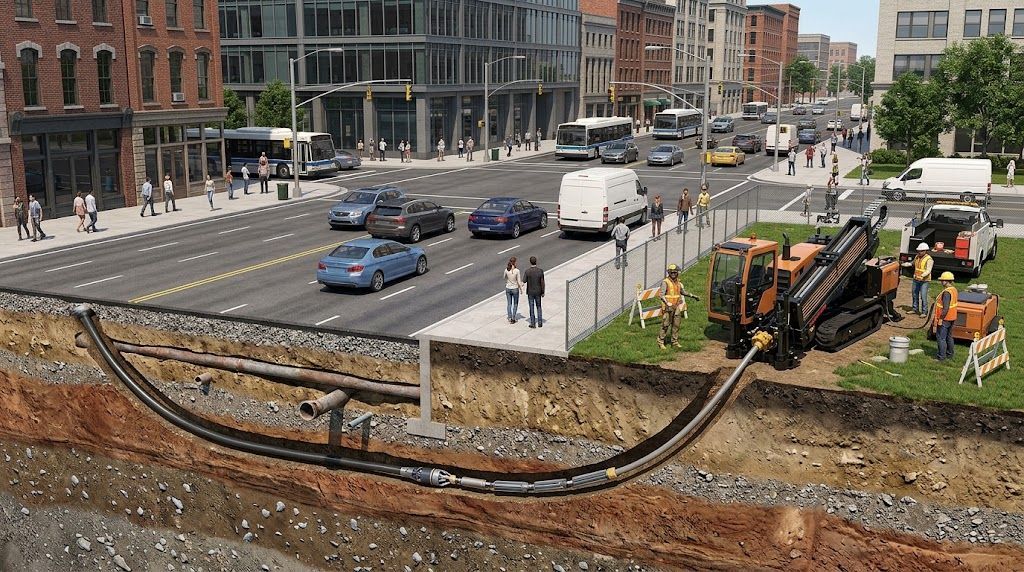
Horizontal directional drilling may be an appropriate option when underground utilities must be installed in areas where conventional excavation would be difficult or disruptive.
Consider HDD for projects involving:
- Utility installations beneath roads and driveways.
- Underground pipe installation across developed properties.
- Telecommunications and fiber optic conduit installation.
- Pipeline crossings beneath suitable natural or constructed obstacles.
- Commercial utility infrastructure improvements.
- Projects where minimizing surface excavation is important.
However, not every site is suitable for horizontal directional drilling.
Ground conditions, utility clearances, equipment limitations, environmental concerns, and construction requirements must be evaluated before selecting the method.
Frequently Asked Questions About Horizontal Directional Drilling
What is horizontal directional drilling used for?
Horizontal directional drilling is used to install underground pipes, conduits, and utility lines without excavating a continuous trench. Common applications include gas pipelines, water lines, electrical conduits, and telecommunications infrastructure.
How does horizontal directional drilling work?
The process involves drilling a guided pilot hole, enlarging the borehole when necessary, and pulling the underground pipe or conduit through the prepared pathway.
Is horizontal directional drilling better than traditional trenching?
Horizontal directional drilling can be beneficial when minimizing surface disruption is important. However, traditional trenching may be more practical for certain installations, depending on soil conditions, accessibility, and project requirements.
What equipment is needed for horizontal directional drilling?
Common equipment includes an HDD rig, drill rods, drill heads, tracking systems, reamers, pullback assemblies, and drilling-fluid management equipment.
Can horizontal directional drilling install fiber optic cables?
Yes. Horizontal directional drilling can create underground pathways for conduits used in fiber optic installations, helping reduce surface excavation along suitable routes.
How long does horizontal directional drilling take?
Project duration depends on the bore length, ground conditions, pipe diameter, equipment requirements, and site accessibility. Each project requires an individual assessment.
Get Professional Horizontal Directional Drilling Services From United HDD
When your project requires reliable underground utility installation, choosing an experienced contractor is an important part of the construction process.
At United HDD, we understand the importance of careful planning, appropriate drilling equipment, and efficient underground construction practices.
Whether your project involves Horizontal Directional Drilling, pipeline installation, utility infrastructure, or related underground construction services, our team can help you evaluate your installation needs.
Contact United HDD to discuss your upcoming project, review your requirements, and request an estimate for professional directional drilling services.
Phone: 888-618-5287
Email: estimating@unitedhdd.com
REQUEST AN ESTIMATE